If you look at a lot of art photography, or read the sartorialist, or follow wedding and engagement photography, you've probably seen a lot of photos of people standing in the middle of a fairly vacant street or sidewalk with a very neutral expression looking at the camera. I'm not sure I could tell you where it all began. I know that when August Sander did it in the 1920s it was still fresh:

Vintage 1927 Anton Räderscheidt via raederscheidt.com
Decades later in the 1970s people like William Eggleston were doing it:

Eggleston (there are better examples, but not that I could find easily on the web)
Today, it is often the go-to fashion in the street portrait:

And many many contemporary art photographers use the pose:
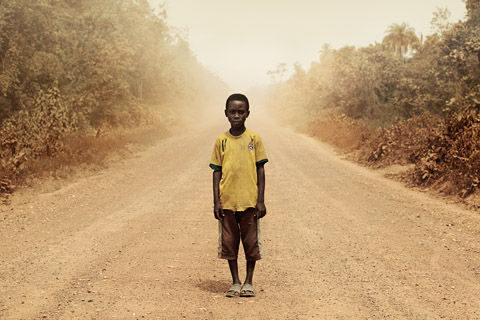
John Keatley via Feature Shoot just happened to be in my rss feed
And the look has been a trend among wedding photographers, as in this photo I found pinned on Pinterest (not quite as neutral as some):

I would be surprised if some of you hadn't noticed how frequent this is used. I'm just wondering, has this been worn out or is it timeless?
I want to be clear that I think originality is overrated. Throw a stone at a photo show and you're almost certain to hit something that has been done by a dozen other photographers. Take my post on car wreck art, for example. It seems that whatever you can think of has been done or is being done. More important than originality is context, depth of thought, execution, coherence, etc. etc. So maybe what I'm wondering about is the intent behind the choice. Obviously, we are dealing with a pose, so there is a conscious decision to strip away things like movement and emotion. To the American eye, the lack of a smile can come across as sad, but that's a subjective. What I tend not to get from these types of photos (and this is just my opinion) is a sense of personality. For Eggleston, who was fond of photos that cropped off the head (something also common in portraiture today), the people were never really as much the point anyway—at least not compared to questions of color and composition. For Sander, the project was to create a sort of visual index of social types. For the sartorialist, the idea might be to strip away all elements of personality except the clothing. Who knows? For Keatley, the fact that he was photographing Liberian children in need of clean drinking water may have influenced the choice. For that bridal pic, I have no idea.
Let me wax academic and then I'll end my pseudo rant. There's a nifty little term of Greek origin called "catachresis." This goes beyond cliché and into the realm of dead metaphors. It describes an intentional or unintentional misuse of language such as mixing metaphors, misinterpretations, anachronistic readings (like, if you interpret "gay" in some 1920s song as a comment about sexuality) and so on. Theorists like Derrida salivated over the general ambiguity of the term and used it to explain fundamental problems with language itself. Is the "neutral expression standing in the street" pose falling into a state of catachresis? Are people misusing a visual language? Are we taking Sander's cataloging approach, for example, and unintentionally interpreting it as a fashion statement? What do you think?