Showing posts with label Portraiture. Show all posts

Friday, October 12, 2012

Triangular Desire: A Portrait Posing Tip

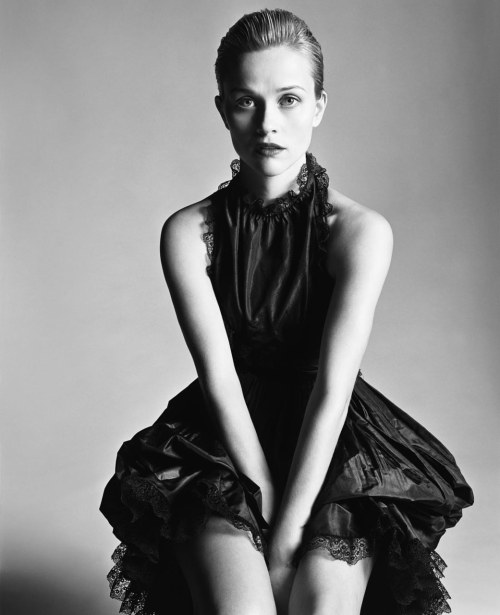
In 2009, I did a "Composition 101" post that used album covers to demonstrate how strong diagonal lines impact photos. Today, I want to show how every hipster's favorite shape—the triangle—can create stunning portraits.  Look for the triangles in the gorgeous portraits below for inspiration on your next shoot:

Rodney Smith


Maria Callas (c) Cecil Beaton, 1957


Reese Witherspoon. Photography by Michael Thompson


Jeanloup Sieff


Ida Wyman, Girl with Curlers, 1949


“Butterfly Boy” (1949) by Jerome Liebling.


(I'm not sure who did this portrait of Bowie)


August Sander


Loretta Lux
Source: google.com via Marc on Pinterest


Alberto Giacometti (by Irving Penn)Source: google.com via Marc on Pinterest

Monday, February 1, 2010

February Monthly Special: The Face

(If you're a long time reader, you've seen the above portrait as part of a face grid)

The iconic film director John Ford once said that there is no greater landscape than the human face. Or at least that's what I heard quoted by one of the directors at the Sundance Film Festival last week. I googled it but ended up on the Oscar Wilde quote, "A man's face is his autobiography. A woman's face is her work of fiction." Not quite what I intended.

When considering this month's theme, I kept coming back to the human face because:
  1. I am one post away from doing a complete portrait retouch workflow tutorial
  2. I gave my students a portrait assignment and was surprised at how many people downplayed the human face
  3. The fact that interesting faces can be found anywhere has been of great consolation when I'm not in a photogenic city.
  4. A simple close-up is one of my favorite styles of portrait.
I have always loved an extreme close-up.

It's so easy to get preoccupied with clothing, environment, experimental angles, effects, colors and so on, that the actual face can become an afterthought. And then there's that problem of the mask—that smiling "say cheese" face that people make. Any parent knows that at some point in early childhood, you start to see the fake smile, like this:
It can be cute for one photo, but when you kid starts doing it in every photo it can drive you crazy. And then what do you do? If you're like most people, you start coaching them to smile "normally" and you battle of the smiles ends up reinforcing the idea that there is one certain expression suitable for every portrait.

Here are two shots of Eva prior to the "say cheese" smile:

Does this mean that by age three we are doomed to less realistic portraits? Of course not. But we might have to work for them a little harder.

This month we're going to focus on the face. Just the face. Naturally, I'll do the portrait retouch workflow I've been promising, but even more important than Photoshop tutorials will be ideas for getting simple and interesting portraits that bring out personality, that explore, in the purported words of John Ford, "the landscape of the human face."

Don't be shy. Share your favorite portraits by posting on your blog and linking back here (as explained in my FAQ page) sometime this month.

Wednesday, July 1, 2009

July Monthly Special: Fragmentary Portraiture

Our son, Lucas, has his mom's lovely pout...
...and his dad's playfulness.

Introduction
Have you ever noticed that one of the first things parents, family, friends, and sometimes even strangers do when they see a baby is to play a "match that feature" game? Oh, she has her father's eyes! That chin is definitely from our side of the family. He looks just like you! Your great uncle had that exact same hair! Sometimes relatives from both sides of the family seem to want to stake their claim on as many parts as possible, each set of grandparents insisting that junior is the spitting image of someone on their side of the genetic tree. But I don't believe this tendency is actually a turf war, because casual acquaintances and complete strangers are just as likely to participate in it. I know I have. Have you ever told someone how much their child looks like them only to find out that they're adopted? I have.

In other relationships, we also focus on the parts more than the whole. If beauty is in the eye of the beholder, maybe it's because each beholder focuses on different parts. At the wedding I shot last Saturday, the groom described meeting the bride in a history class where she was seated next to him. "The first thing I noticed was her perfect little nose," he reminisced.

Facial features are a pretty safe bet if you want to recognize a person's physical qualities without coming across like a pervert of a sexist pig. The line between "appreciating" and "objectifying" is often found just below the neck.

Because love and sexuality have so much impact on our choices in life, we can understand how easily a part-by-part look at a person can slip into connotations beyond our intentions. But looking at the part as it relates to the whole need not be about love or attraction. A person's hands say a lot about their occupation (manual laborer?), their personality (meticulous? stressed out?), aesthetics (quirky? minimalist?). A compelling portrait does not necessarily need a complete face. In fact, it may not need a face at all.

The challenge
This month we will look at what I am calling—for lack of a better term— "fragmentary portraiture." Had I wanted to wax literary (as I am prone to do), I could have chosen "metonymic" or "synecdochal" portraiture. But people tend to find the terms confusing. If I wanted to create a painfully stupid yet descriptive pun, I could have called this "partraiture." But then, to many people in Utah, that pronunciation just sounds like the local dialect. I also could have chosen "extreme close-up," but that's not what I'm going for. "Fragmentary portraiture" is a portrait through an isolated part of a person, and that doesn't have to mean it will be a close-up.

Fragmentary portraiture, as I am choosing to define it:
  • conveys a sense of the person through a depiction that is limited to a single part
  • includes the body and things directly attached to it (i.e. clothes count, but a car—even if you are almost always in it—does not).
That's it. The basic idea is simple, but allows for a lot of possibilities (but let's keep it family friendly, shall we?).

Hopefully, I will get this whole link problem sorted out in the next few days. If, for any reason, you want to post and share your results but can't get the link to work, just email it to me.
UPDATE to link problems: almost completely fixed! feel free to post your results whenever you have them (don't forget to use the permalink URL of your post—and check the "TOP monthly special" box when adding a link" but not just for a comment)

Friday, April 10, 2009

Street Portraiture

A couple of posts ago, "P" posted the following question:

I've developed an interest in street photography and taking portraits of strangers. Do you have any tips on how to approach people on the street for a quick portrait without creeping them out?

In response to that question (See how much I like comments!), I decided to conduct an experiment here in New Orleans. My goal is to ask ten people on the street if I can take their photo. So far I have only asked four because it takes longer than you might think to find a subject. It also takes guts. Here are the results so far:

subject #1: Irina.
I saw her sitting in a park taking a beer and cigarette break. I simply approached her and said something like "I love how colorful you are. Can I take your picture?" She put down the cigarette and I asked her to keep it for the photo. We talked for a while and she asked me if I would be in town next week to do some body-painting photography for her (I won't, although I'm sure it would have been interesting). We talked about her recent trip to Amsterdam, about neon paint, and other things. Approaching her for the photo led to a memorable experience that was well worth the potential refusal.

subject #2: the tattooed girl with bike
Emboldened by my initial success, I reacted quickly when I saw a girl with some pretty original tattoos coming toward me with her bike. "Great tatts! Can I take a picture?" She obliged. It was that simple. We talked about how a friend of hers did the tattoos then she introduced me to her girlfriend (I really should have taken a picture of them together), and that was that. I love the personality in her expression.

subject #3: washboard musician
Street portraiture does not always have to include faces. Here, I just wanted the hands of the man playing a washboard with a jazz band in the street. In order to take the photo, I had to get right up behind him while he was playing. He looked up at me and I mouthed "Can I take a picture" while pointing from my camera to the washboard. He nodded yes. I then stuck around and listened to the group.


Above is a shot of some of the other musicians. The singer (dancing at left) reminded me of Gelsomina in Fellini's La Strada. I tipped them after taking some photos (always tip street performers if you photograph them) and then I bought their CD. Another great experience.


subject #4: feet of tourists eating beignets at the Café du Monde.
Next to the Café du Monde, where tourists wait in endless lines to eat beignets (basically a rectangular donut covered in powered sugar), I noticed ground flocked with excess powdered sugar and asked the couple seated on the bench if I could take a picture. OK, I didn't exactly ask. I just sort of told them. In some cases (you be the judge), telling is preferable to asking. For me, this was a better souvenir than a beignet, and I didn't have to wait in line.

I need to get back out on the street now. A few thoughts before I go:
  • Street photogrpahy is more fun and less expensive than buying souvenirs. I haven't set foot in a single shop.
  • Most people will let you take their portrait if you are natural, complimentary, and friendly about it. Tell them it's for a project if you like or an assignment from a crazy blog that you read.
  • Even though I am currently batting 1000, I think that pre-screening your subjects is necessary. What I mean is that some people don't even want you to look at them much less take their photo.
  • Remember that the type of photo you get from a street portrait is not the same as a candid street photograph. Each has its place, but don't expect to make one into the other.
  • Don't hesitate or you will miss an opportunity. I saw the toughest wheelchair-bound guy ever today. I wanted to take his picture, but we were both crossing the street in opposite directions. I later regretted not turning around.
If you decide to give it a try, post your results on your own blog (or photo sharing site) and link them back here on the monthly special page.